


To fully enjoy a hike or an outdoor adventure, you need to know how to dress.
With the right clothing, an afternoon alpine thunderstorm can feel surreal and even magical. But if you’re unprepared, that same storm can ruin your day—leaving you shivering, soaked, and cold to the bone.
To dress properly, it’s essential to understand how the body manages heat and how to stay dry even under intense physical effort and heavy sweating.
Staying dry is key to regulating body temperature—and that’s why choosing the right base layer, the one in direct contact with your skin, is so important.
THE BASE LAYER
The base layer is the closest to your skin, and its main role is to manage moisture.
Its job is to keep you dry by pulling sweat away from your body and spreading it across a wider surface area, speeding up evaporation and drying time.
At the same time, the fabric should fit closely to the body and retain insulating properties even during heavy perspiration.
The first layer is critical, and it must be made of technical fabrics designed specifically to wick sweat away from the skin and toward the outer layers—without losing body heat.
What you should never wear as a base layer is cotton. Cotton absorbs moisture but traps it within the fabric, drawing heat away from your body and increasing cooling through evaporation.
For example, after a run, a cotton T-shirt will soak up sweat and take a long time to dry. When combined with a cool breeze, that wet shirt will rapidly drop your body temperature—leaving you uncomfortable or even chilled.
To avoid this, you need technical fabrics that wick moisture quickly and dry fast. That’s why we developed DRYTEK—a high-performance fabric that ensures thermal insulation while transferring moisture away from the skin and keeping your body temperature stable.
To measure the performance of such fabrics, several technical standards are used, including RET (Evaporative Resistance), RCT (Thermal Resistance), and others outlined in the AATCC 195:2012 standard for sweat management.
Lab Test: DRYTEK vs. Cotton
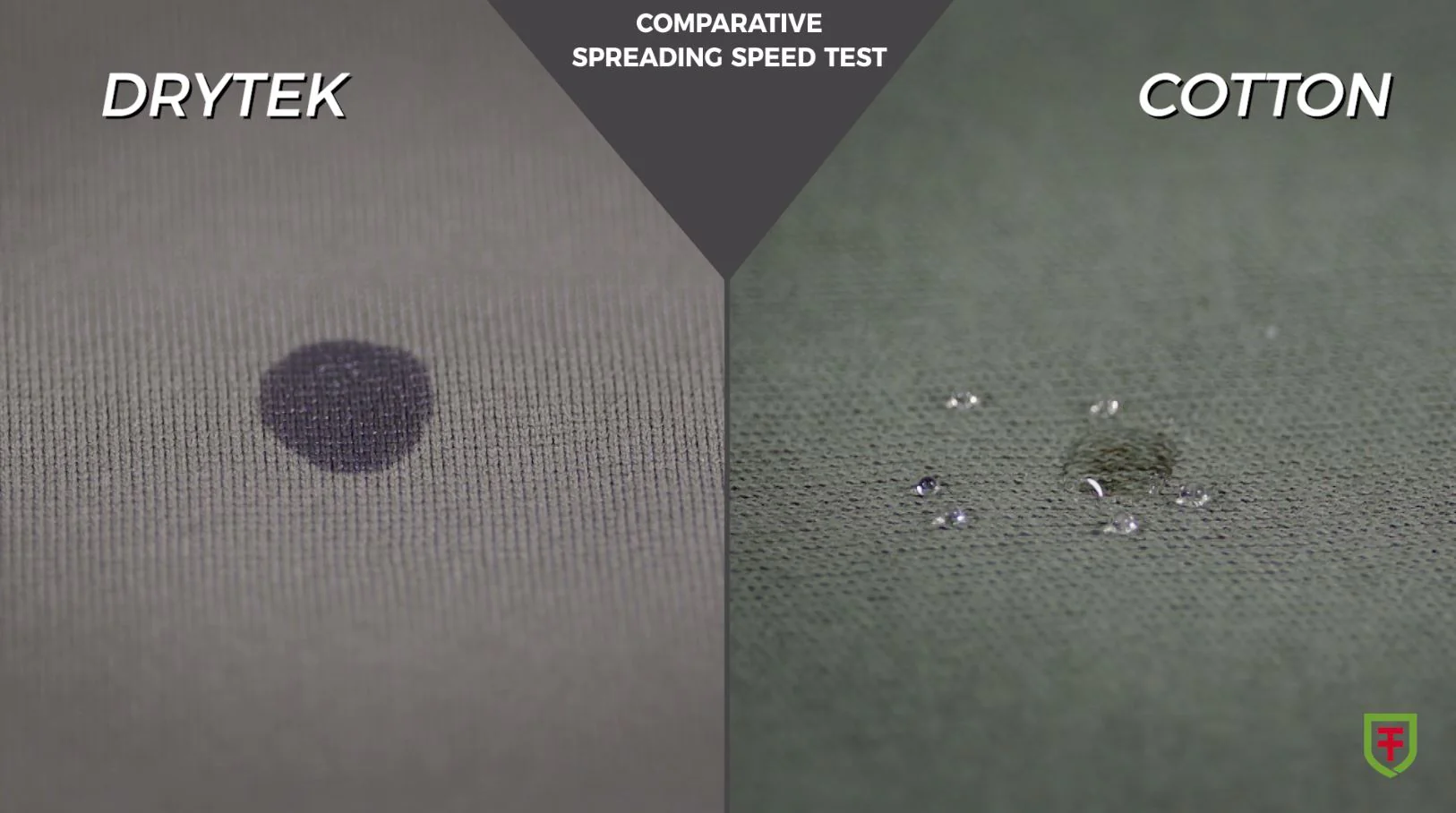
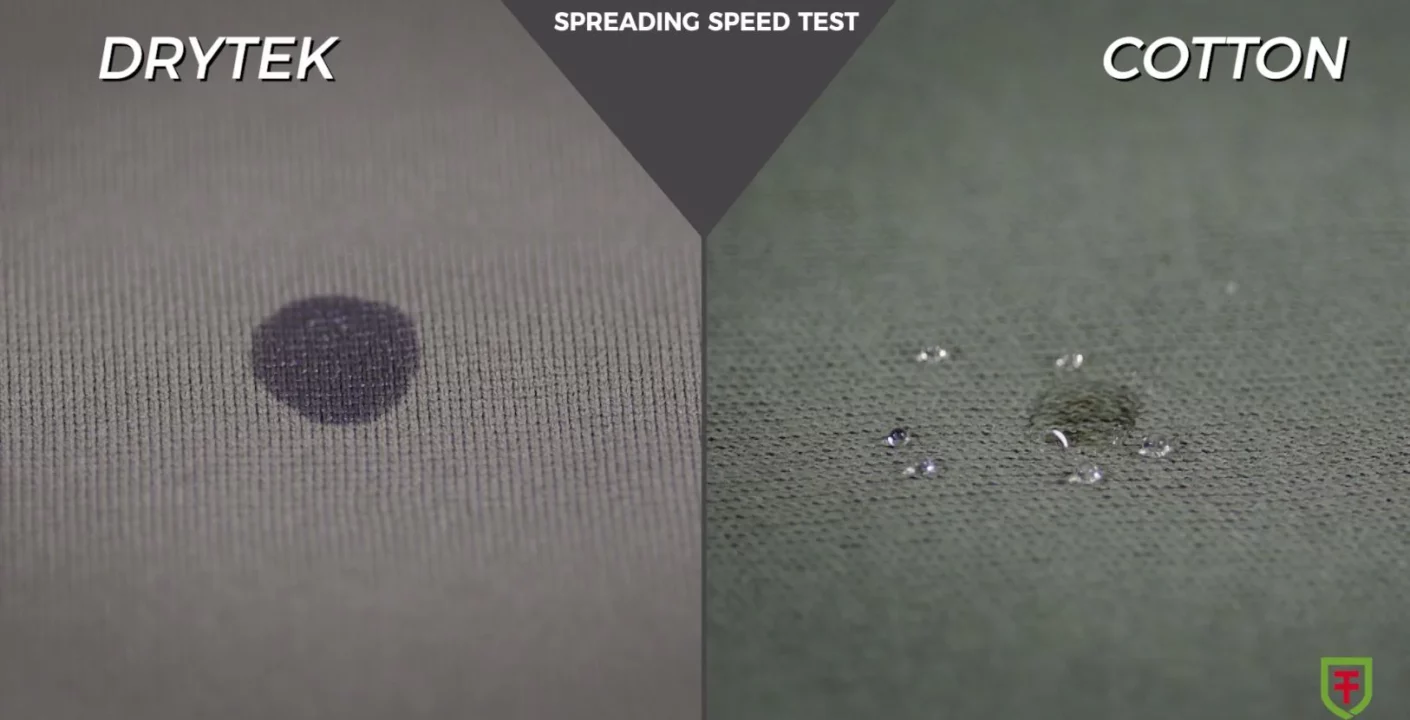
We conducted a simple comparative test between DRYTEK and cotton using the “drop method”—a great way to replicate moisture absorption, dispersion, and drying at home.
Two drops of water are placed simultaneously on both fabrics:
Initial absorption: The DRYTEK fabric immediately absorbs the drop.
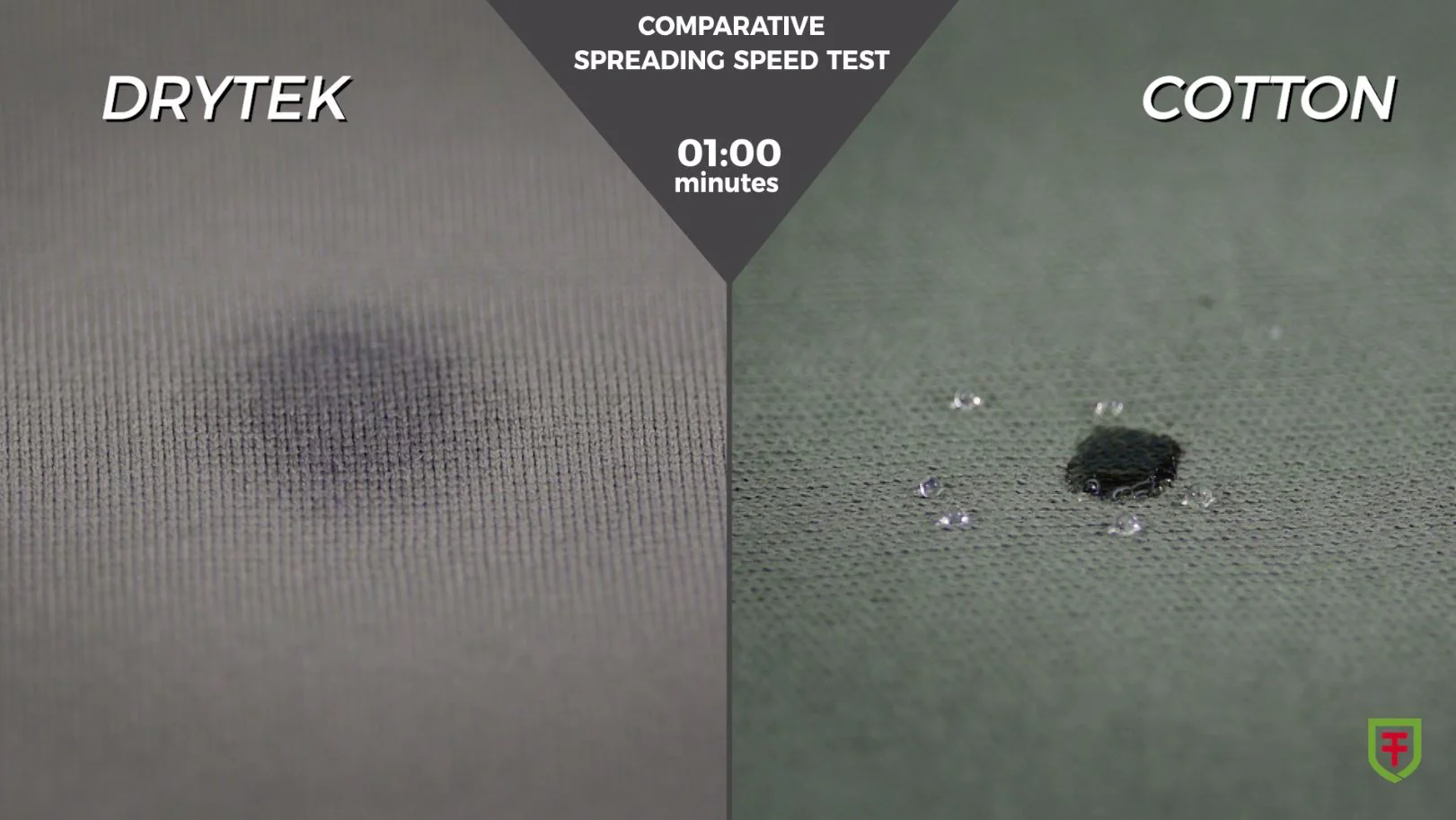
After 1 minute: DRYTEK shows a far wider dispersion area compared to cotton, which only partially absorbs the moisture.
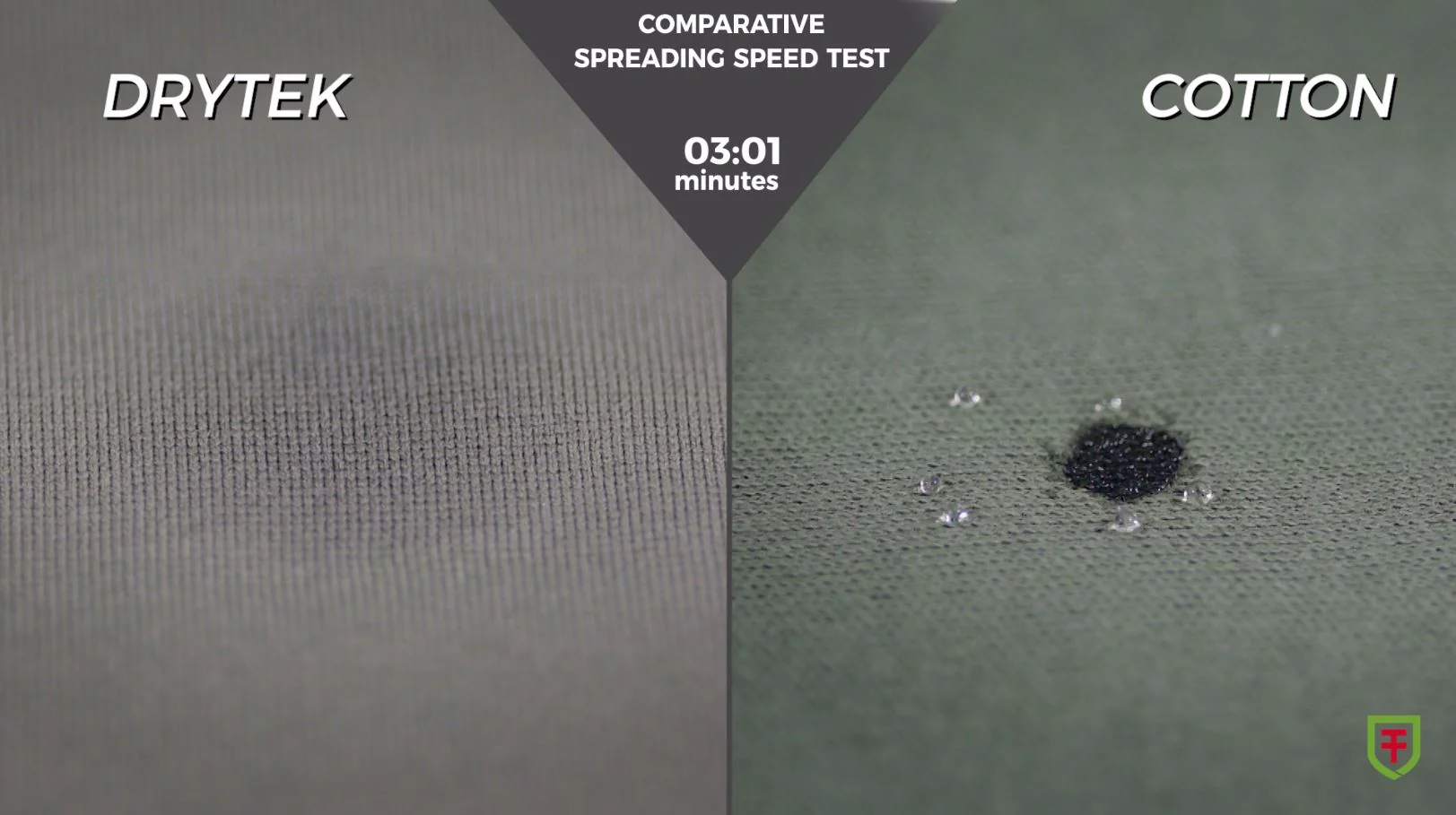
After 3 minutes: DRYTEK reaches its maximum spread and is nearly dry, while the cotton remains mostly unchanged.
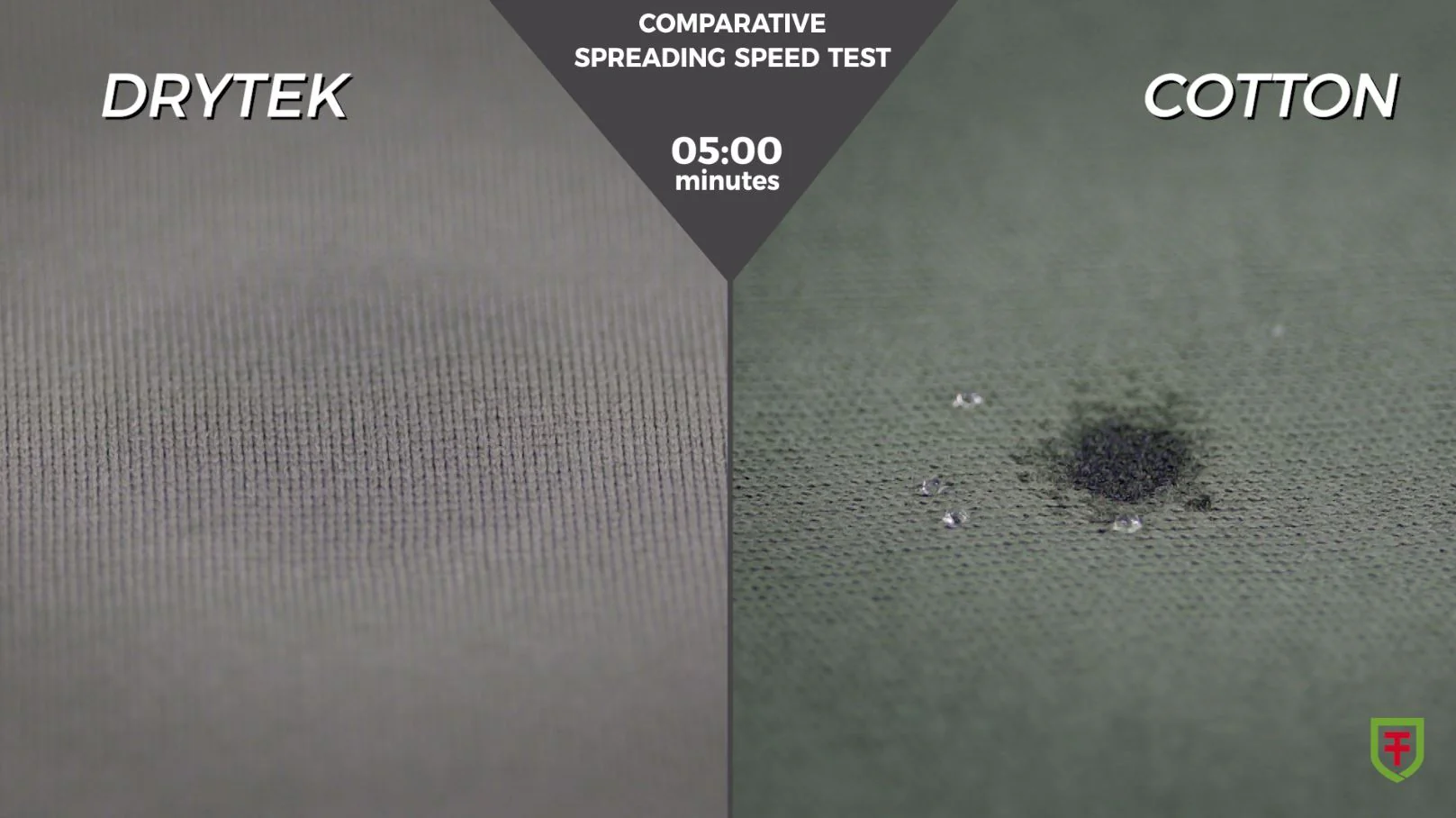
After 5 minutes: The DRYTEK shirt is virtually dry—having efficiently absorbed, dispersed, and evaporated the moisture.
You can watch the full test video on our homepage or on our official YouTube channel.
Enjoy your adventure—stay dry, stay comfortable.